
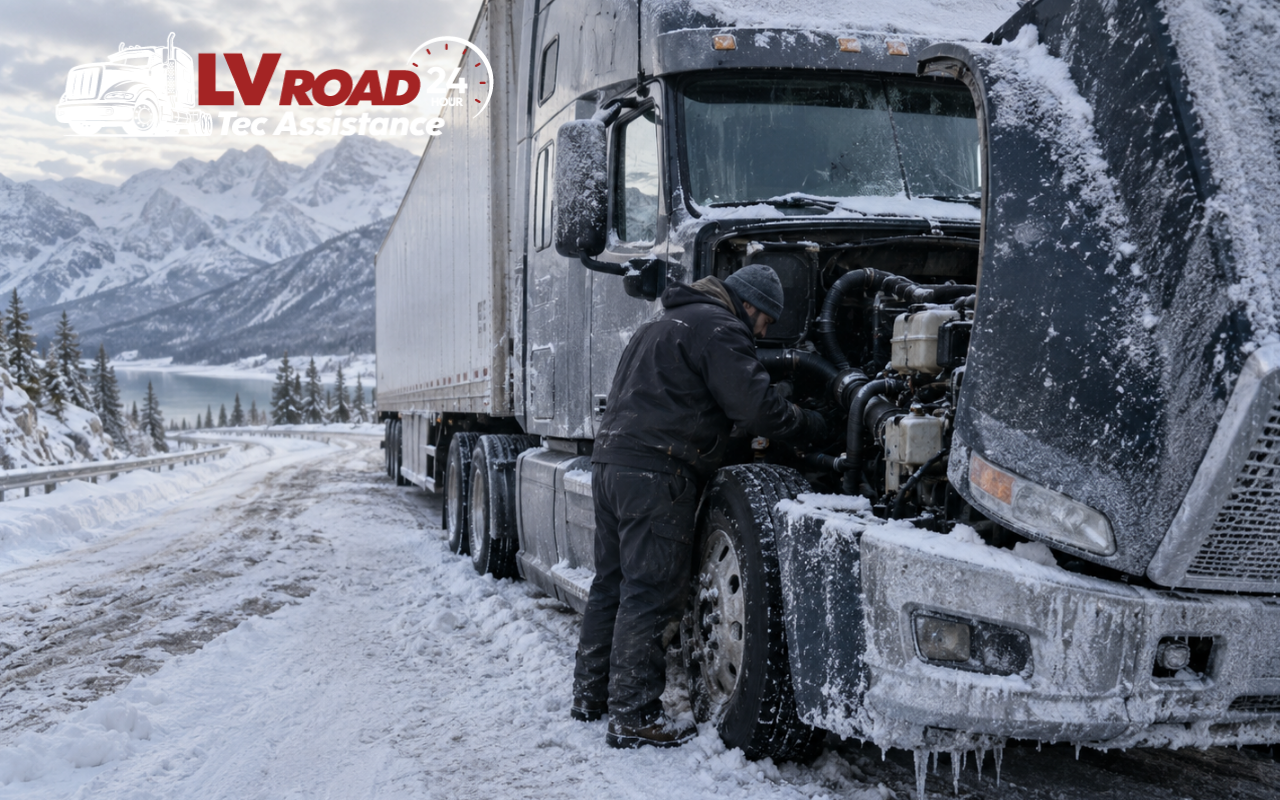
Diesel fuel gelling cold weather mountain routes can stop a truck when temperatures fall fast. Wax forms crystals that may block filters and fuel lines. On remote mountain roads, that can cause a serious delay.
At LV Road Tec Assistance, we help drivers prepare with practical checks and clear service guidance. Good fuel treatment, route planning, and regular care can lower gelling risk before a cold mountain trip.
Diesel Fuel Thickens During Freezing Mountain Travel
Understanding what causes diesel fuel to gel in cold temperatures starts with paraffin wax. As fuel falls below its cloud point, small wax crystals form and make the diesel look cloudy.
When cold continues, crystals can grow and restrict fuel flow. Diesel fuel gelling cold weather mountain routes becomes more likely when trucks sit overnight, climb high elevations, or face sudden temperature drops.
Select Cold Weather Additives Before Starting Your Route
A diesel additive for cold weather trucking can support fuel flow before diesel begins to gel. It works best in warm, liquid fuel, so timing matters before colder elevations.
- Follow the additive maker’s directions for the correct amount.
- Add treatment before temperatures reach the expected cloud point.
- Use winter-ready diesel when it is available along your route.
Our team at LV Road Tec Assistance recommends planning treatment early instead of reacting after a filter is already blocked.
Prepare Fuel Components Before Entering Colder Mountain Conditions
Preventing fuel gelling before winter routes includes checking the parts that control fuel flow. A weak filter, water in the system, or damaged lines can make cold-weather problems worse. A simple inspection before departure can reduce the chance of an unexpected stop.
- Inspect fuel lines, hoses, and filter housings for damage.
- Drain water separators and replace old fuel filters.
- Keep the fuel tank above half full when possible.
For related hot-weather fuel concerns, review our guide to fuel system problems in extreme heat.
Keep Your Diesel Fuel System Clean and Ready
A regular diesel fuel system service helps keep fuel moving through filters, lines, and injectors. Clean parts are especially important in winter because cold fuel moves more slowly. Water or dirt inside the system can also add more strain during freezing conditions.
Before departure, listen for rough running and check for leaks around visible fuel parts. Small warning signs can become bigger problems when temperatures fall.
Diesel fuel gelling cold weather mountain routes is easier to manage when maintenance happens before the trip. At LV Road Tec Assistance, we can inspect fuel system concerns and help drivers address warning signs before winter travel becomes harder.
Plan Fuel Stops Around Elevation and Temperature Changes
Mountain weather can change quickly, so fuel planning matters. Check forecasts before leaving and during long routes. When possible, choose winter-blend diesel in colder regions for better low-temperature flow.
Also, avoid running the tank too low. More fuel can slow cooling and reduce condensation. For broader road service needs, visit our semi truck repair service page.
Respond Safely When Fuel Gelling Causes Engine Problems
If the truck loses power, sputters, or struggles in deep cold, diesel fuel gelling cold weather mountain routes may be involved. Stop safely and avoid pushing the engine harder.
- Move to a warmer or sheltered area when it is safe.
- Warm the fuel system with approved equipment.
- Replace a blocked filter if needed and inspect the fuel.
After the truck runs again, schedule a diesel fuel system service so the cause can be checked before the next route.
Frequently Asked Questions
What temperature can diesel fuel begin to gel?
Gelling depends on fuel type, blend, and additives. Wax may form near the cloud point, so winter treatment should begin before temperatures reach that level.
Can an additive fix fuel that already gelled?
Some emergency treatments may help after warming the system, but prevention is better. A diesel additive for cold weather trucking works best when added before the fuel thickens.
Does keeping the fuel tank full help?
Yes, a fuller tank can reduce condensation and slow fast temperature changes. It does not replace winter fuel treatment, but it supports better cold-weather preparation.
Should drivers change filters before winter mountain trips?
Yes, especially when the filter is old or dirty. A clean filter gives fuel more room to flow if wax crystals begin forming in cold conditions.
When should professional fuel system help be requested?
Get help when power drops, filters keep clogging, or fuel problems return. Our team can check the system and explain the safest next step.
Build A Reliable Winter Fuel Plan Before Departure
Diesel fuel gelling cold weather mountain routes does not have to catch you by surprise. Use winter-ready fuel, apply additives correctly, inspect the system, and follow mountain temperatures. These steps lower breakdown risk.
At LV Road Tec Assistance, you can get clear support before or after diesel fuel gelling cold weather mountain routes. If you need help, contact us for fuel system support before your next winter route.

