
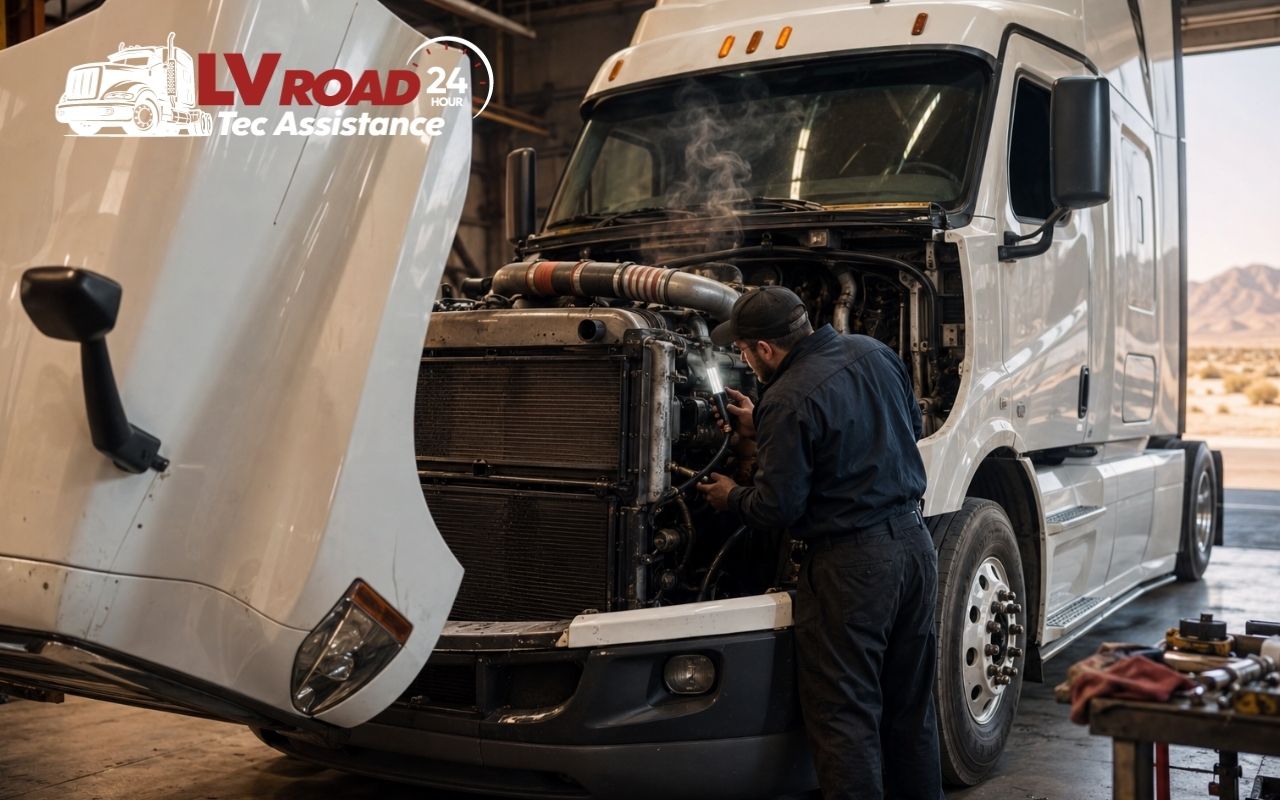
Semi truck turbo failure symptoms can show up as weak power, strange smoke, or loud engine noise. However, these signs may start small, so it is important to notice them early before they lead to bigger engine problems.
At LV Road Tec Assistance, we help drivers understand what these signs may mean. As a result, you can act faster, protect your truck, and keep your route safer.
Turbochargers Support Heavy Diesel Trucks Under Heavy Loads
A turbocharger helps your diesel engine create more power by pushing extra air into the engine. Because of this, your truck can carry heavy loads, climb grades, and keep better speed without needing a larger engine.
Modern turbos can also adjust boost while you drive. However, this design has more moving parts, so VGT turbo semi truck problems may happen when vanes stick, parts wear down, or the actuator stops moving correctly.
Common Causes Behind Turbo Damage In Semi Trucks
Dirty oil is one of the most common causes of turbo damage. Since oil cools and protects the turbo, low or dirty oil can make bearings overheat, wear out, or fail too soon.
- Contaminated oil can damage bearings and seals.
- Blocked air filters may let debris harm turbo blades.
- Cracked hoses can cause boost leaks and weak power.
- Carbon buildup may stop moving parts from working well.
For related warning signs, our common truck problem guide can help you compare turbo issues with other diesel concerns.
Power Loss Can Reveal Semi Truck Turbo Failure Symptoms
Semi truck power loss going uphill is often one of the clearest warning signs. When the turbo cannot send enough air into the engine, the truck may feel slow, heavy, or unable to hold speed under load.
You may also notice the turbo not boosting semi truck performance during highway driving. In many cases, this points to a leak, worn turbo parts, blocked airflow, or low boost pressure that needs proper testing.
Exhaust Smoke Colors That Point Toward Turbo Trouble
Smoke color can tell you a lot about what is happening inside the engine. For example, blue smoke semi truck turbo issues often mean oil is leaking through worn turbo seals and burning in the exhaust.
- Blue smoke can point to oil entering the exhaust stream.
- Black smoke may mean the engine has too much fuel or too little air.
- White smoke can suggest coolant or other fluid is entering the wrong area.
Because smoke can come from more than one problem, a full inspection is the safest next step. With LV Road Tec Assistance, drivers get clear guidance before small warning signs become major damage.
Noises And Vibrations That Should Never Be Ignored
A failing turbo may create a high whining sound that rises with engine speed. This can happen when the shaft has too much play and the wheel starts rubbing inside the housing.
Vibration, rattling, or scraping under load can also be serious. Therefore, if semi truck turbo failure symptoms come with loud noise, it is best to stop guessing and schedule a check before broken parts reach the engine.
Simple Checks Before You Schedule Professional Turbo Service
Some checks can help you find simple causes before deeper repair work begins. Still, internal turbo damage needs the right tools, safe testing, and trained hands.
- Check air filters for dirt, blockage, or poor fit.
- Look over clamps, hoses, and intercooler pipes for leaks.
- Review oil condition and follow proper service timing.
- Listen for new sounds during acceleration and heavy pulls.
Clean oil matters because it protects the turbo from heat and wear. Our oil change interval tips explain why steady service helps protect diesel parts.
Professional Turbo Help Keeps Diesel Engines Moving Safely
When basic checks do not solve the problem, professional testing is the right move. A technician can measure boost, inspect oil flow, check the actuator, and confirm whether the turbo needs repair or replacement.
Drivers searching for turbocharger repair diesel engine in Las Vegas support often need help fast. For roadside or shop-based service, our mobile truck and trailer repair support gives you a direct path to diesel repair help.
Frequently Asked Questions
What are early signs of turbo failure?
Early signs can include weak power, slow acceleration, whining noise, smoke, or poor fuel use. These semi truck turbo failure symptoms may start small, but they can grow quickly under heavy loads.
Can I drive with a bad turbo?
Driving with a bad turbo can make engine damage worse. If power drops, smoke appears, or noise gets louder, it is safer to stop and get the truck inspected.
Why does my truck lose power uphill?
Your engine may not be getting enough boost. This can happen because of a damaged turbo, leaking hose, blocked filter, or another air system problem.
Does blue smoke always mean turbo failure?
Blue smoke often means oil is burning, but the turbo is not the only possible cause. A proper inspection can confirm whether seals, oil lines, or engine parts are involved.
When should I call for turbo repair?
Call when smoke, power loss, low boost, or strange noise continues after simple checks. When you contact LV Road Tec Assistance, we explain the safest next step for your truck.
Fast Action Helps Protect Your Engine And Route
Semi truck turbo failure symptoms should never be ignored because turbo problems can lead to larger engine damage. However, early action can reduce downtime, protect fuel use, and help you avoid unsafe road delays.
For help with warning signs, inspections, or repair planning, use our contact page for repair guidance. As a result, you can move forward with a clearer plan and better confidence.

