
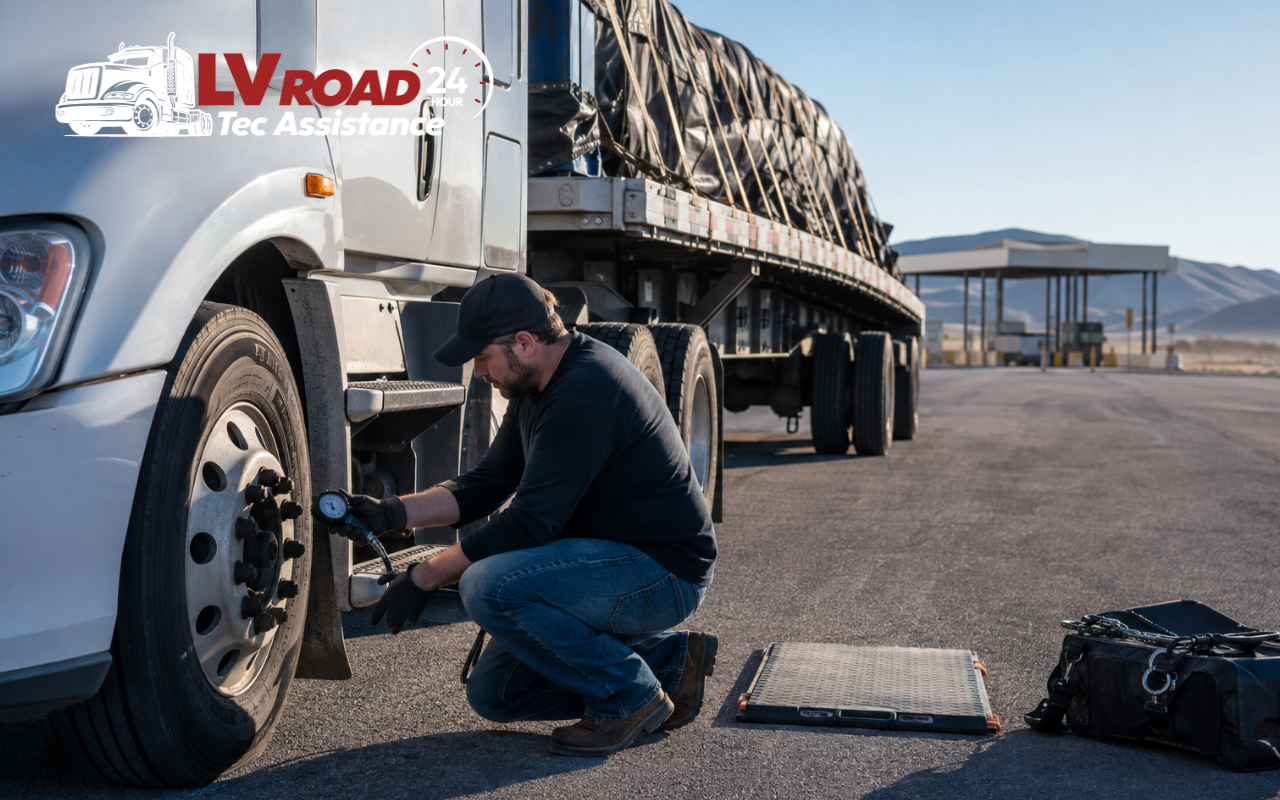
Truck weigh station violations in Nevada can cause fines, delays, and stress for drivers and fleet teams. At LV Road Tec Assistance, we help operators prepare before they reach a checkpoint, so each trip starts with better information and fewer surprises.
Weight rules protect roads, bridges, and everyone who shares the highway. Therefore, checking total weight, axle balance, documents, and safety items before departure can reduce risk and keep freight moving on schedule.
This guide explains the main checks in simple terms. It also shows how planning, maintenance, and clear records can help drivers avoid preventable stops. Since routes and permits can differ, each fleet should review the rules that apply to its vehicle, cargo, and travel plan.
How Nevada Weigh Stations Protect Roads And Drivers
Nevada weigh stations check commercial vehicles for legal weight and basic safety. Officers may review gross vehicle weight, axle weight, permits, tires, brakes, and load security. These checks help prevent road damage and reduce the chance of unsafe handling.
Truck weigh station violations often begin with a small planning mistake. For example, an uneven load can place too much weight on one axle even when total weight seems acceptable.
Because truck weigh station violations can involve more than excess weight, drivers should also watch signs and follow station instructions. Missing an open station can create a separate problem, even when the truck meets weight limits. A calm approach, complete paperwork, and a ready vehicle make the process easier.
Key Truck Weight Limits Every Driver Must Review
Most interstate trucks follow the federal gross limit of 80,000 pounds, unless a permit or special rule applies. Single and tandem axle limits also matter. Because each load is different, drivers should verify the current rule for their route.
- Check gross vehicle weight before leaving.
- Confirm weight on every axle group.
- Review bridge formula limits when needed.
- Carry permits for approved special loads.
Common Loading Mistakes That Lead To Weight Violations
Many truck weigh station violations in Nevada come from rushed loading, poor communication, or missing checks. A load may shift during travel, or fuel added after weighing may push the truck over a legal limit.
Other problems include skipping a required stop, using old permit details, or failing to correct an axle imbalance. Our team recommends a final review before entering any major highway.
Major Fines And Operational Risks Fleets Should Expect
Truck weight limits and fines for 2026 can vary by the amount over the limit, the axle involved, and the type of permit. As a result, fleets should confirm current Nevada and federal rules before every trip.
DOT weight violation consequences for semi trucks may include citations, offloading, route changes, inspection delays, or added review. Repeated issues can also hurt delivery times, safety records, customer trust, and future contract opportunities.
Practical Steps For Avoiding Common Nevada Weight Problems
Drivers asking how to avoid weigh station violations in Nevada should begin with certified scale checks and clear load records. In addition, dispatchers, loaders, and drivers should share the same weight details before departure.
- Use a certified scale after loading.
- Adjust tandems before entering the highway.
- Keep permits and shipping papers ready.
- Inspect tires, brakes, lights, and securement.
- Recheck weight after major cargo changes.
For wider inspection planning, review our DOT inspection preparation guide.
Reliable DOT Compliance Support For Las Vegas Fleets
A DOT compliance service in Las Vegas can help teams review records, inspection routines, permits, and driver procedures. At LV Road Tec Assistance, we focus on simple guidance that supports safer trips and better daily decisions.
When a truck also needs mechanical attention, our Nevada truck and trailer repair services can support the next step. Good maintenance and good records work together.
Frequently Asked Questions
What Happens When A Truck Is Overweight?
Officers may issue a citation, require weight correction, or stop the truck until the load is legal. The result depends on the amount over the limit and the exact rule involved.
Can A Legal Total Weight Still Violate Rules?
Yes. A truck can meet the total limit but still have too much weight on one axle or axle group.
Should Drivers Weigh After Adding Fuel?
Yes. Fuel adds weight, so a final check can prevent an unexpected overage near the start of a trip.
Do Permits Remove Every Weight Restriction?
No. Permits usually include route, axle, time, and operating conditions that drivers must follow carefully.
Where Can Drivers Request Local Service Help?
Drivers can get in touch with us for direct support and next-step guidance.
Keep Every Nevada Truck Route Safer And Compliant
Preventing truck weigh station violations in Nevada becomes easier when every trip includes weight checks, clear records, and strong communication. With LV Road Tec Assistance, you receive practical support from a team that understands roadside pressure.
- Plan the load before departure.
- Verify the final weight.
- Correct axle balance early.
- Keep documents easy to reach.
To confirm where support is available, view our mobile truck service areas. A careful routine protects drivers, freight, equipment, and delivery schedules.

