
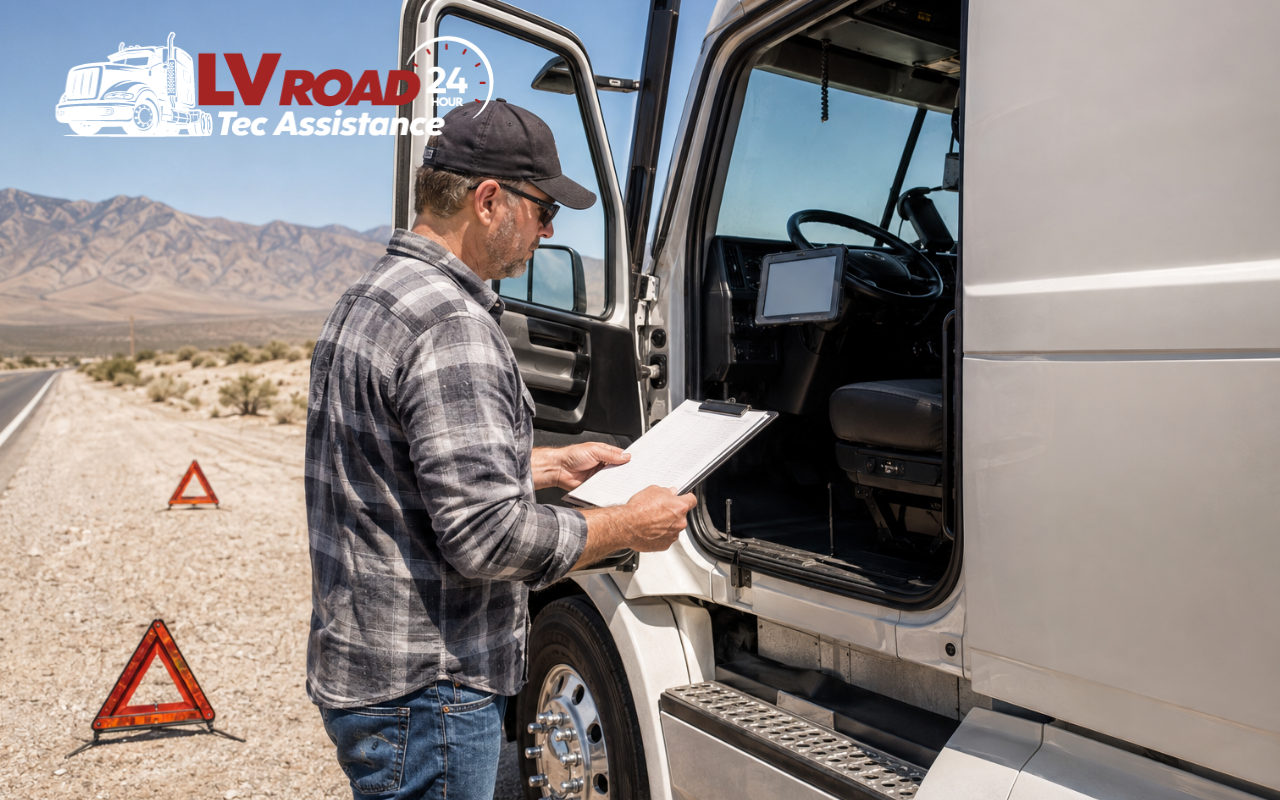
Multi-state DOT compliance for semi trucks can feel complex when each route crosses different rules. However, a clear plan helps drivers protect schedules, avoid delays, and move freight with more confidence.
At LV Road Tec Assistance, we focus on simple steps that support safer trips. This guide explains key records, inspections, training, and route planning for fleets working in Nevada and nearby states.
Core Rules That Shape Interstate Trucking Compliance Plans
Federal rules create the base for interstate trucking, but states may apply different limits, permits, and inspection practices. Therefore, carriers must understand cross-state DOT requirements for truckers before sending a vehicle beyond Nevada.
Multi-state DOT compliance for semi trucks in Nevada starts with strong maintenance, correct driver records, and clear permit checks. A simple process helps dispatchers and drivers spot missing items before they cause roadside problems.
Nevada Routes Require Careful State-by-State Compliance Rule Checks
Rules can change across Nevada, California, Arizona, and Utah. For example, truck speed limits, emissions rules, axle limits, and oversize permits may differ. These details affect travel time, fuel use, and legal route choices.
- Check weight and axle limits before dispatch.
- Confirm permits for oversize or special loads.
- Review state truck speed and lane rules.
- Plan for inspection stations along the route.
Our team at LV Road Tec Assistance recommends using a route checklist for every state. For California travel, review our California DOT inspection guidance before departure.
Current Records Keep Drivers Ready For Roadside Reviews
Good records make inspections faster and reduce confusion. Drivers should carry registration, insurance, permits, medical documents, and current log records. Maintenance files must also show regular checks for brakes, tires, lights, and other safety parts.
A multi-state trucking compliance guide for 2026 should include clear document dates and renewal reminders. Digital copies can help, yet drivers should still confirm which records must be available in a specific form.
Pre-Trip Inspections Reduce Violations And Unexpected Roadside Downtime
A careful pre-trip check can catch small problems before they become serious. Drivers should inspect lights, brakes, tires, mirrors, fluids, load securement, and safety equipment. They should also record each issue and report it before leaving.
- Walk around the truck and trailer.
- Test brakes, signals, lights, and horn.
- Check tires, wheels, and visible leaks.
- Confirm cargo is balanced and secure.
- Sign and save the inspection record.
Because DOT inspection differences by state can affect roadside checks, fleets should update forms when routes change. Multi-state DOT compliance for semi trucks in Nevada becomes easier when every driver follows the same basic process.
Driver Training Builds Confidence Across Changing State Requirements
Training should explain hours of service, weight rules, permits, emissions needs, and inspection steps. Clear examples help drivers remember where requirements change and what action to take at scales, checkpoints, or roadside stops.
Hands-on practice is also useful. Drivers can learn how to complete permits, use logging tools, and report defects. For Arizona routes, our Arizona truck repair support can help when mechanical issues affect compliance.
Technology Makes Daily Fleet Compliance Easier To Manage
Digital tools can make multi-state DOT compliance for semi trucks easier and reduce missed deadlines or paperwork errors. Electronic logs track service hours, while fleet systems can show maintenance needs, permit dates, and route limits.
- Set alerts for permit and registration renewals.
- Store inspection reports in one secure system.
- Track maintenance schedules by truck and trailer.
- Flag routes with special weight restrictions.
With LV Road Tec Assistance, we encourage practical tools that drivers can use easily. For local support, visit our Nevada truck and trailer repair services.
Frequently Asked Questions
Why do state DOT rules differ?
States may set added rules for roads, emissions, permits, speed, and inspections. Federal standards still apply, but local requirements can change the way a route is planned.
Which records should drivers carry?
Drivers commonly need registration, insurance, permits, medical records, and hours-of-service logs. Fleets should confirm each state’s current document rules before departure.
How often should compliance files be reviewed?
Review files each month and before long cross-state trips. Also, check renewal dates and update records after inspections, repairs, or driver changes.
Can technology prevent every DOT violation?
No. Technology supports better tracking, but drivers and managers must still inspect equipment, review records, and follow current rules.
When should fleets request inspection help?
Request a DOT inspection service before major trips, after repairs, or when inspection history shows repeat issues. Early checks can prevent roadside delays.
Build A Reliable Compliance Routine For Every Route
Multi-state DOT compliance for semi trucks in Nevada works best as a daily habit, not a last-minute task. Regular audits support multi-state DOT compliance for semi trucks, while clear training and careful inspections protect drivers, cargo, and delivery schedules.
At LV Road Tec Assistance, we help fleets prepare for safer travel across state lines. For route-specific support or a DOT inspection service, visit our truck compliance contact page and plan the next step.

